Interview Prep · Ranked & Tested · 2026
The Best Book for Interview Preparation Isn’t One Book
It’s the right book for your interview type. We ranked 10 proven titles by the job they actually win — behavioural, coding, consulting, executive — and matched each to a real preparation plan.
★ Quick answer
There is no single best book for interview preparation — the best book depends on your interview type. For software roles, choose Cracking the Coding Interview. For consulting, choose Case in Point. For behavioural and competency panels, choose a STAR-method guide. Most candidates get the biggest result from pairing one role-matched book with a structured rehearsal system and practising answers out loud for two to three weeks before the interview.
- Behavioural / competency panel: a STAR-method answer guide
- Software / coding interview: Cracking the Coding Interview (Gayle Laakmann McDowell)
- Consulting / case interview: Case in Point (Marc Cosentino)
- Leadership / management: The Manager’s Book of Questions (John Kador)
- Nerves & presence: Presence (Amy Cuddy)
- Career change / direction: What Color Is Your Parachute? (Richard N. Bolles)
Most “best interview books” lists hand you twelve titles and let you sort it out. That’s the wrong job. The book that turns a software engineer into a confident interviewee is useless to a management consultant, and the consulting bible will sink a graduate facing their first competency panel.
So we did the sorting for you. We read, cross-checked and stress-tested the field, then ranked ten titles by the single thing that matters: the interview each one actually helps you win. Behavioural and competency panels. Coding screens. Case interviews. Executive presence. Career-change interviews. Each pick is matched to a candidate and a plan, not just a blurb.
One theme runs through every credible source on interviewing: reading is necessary but never sufficient. A book gives you a method; the offer comes from rehearsing your own answers out loud until the method disappears and only you remain. That’s why our top pick isn’t only a book — it’s a structured system you can actually run in the two weeks before a real interview.
Buying five books is procrastination disguised as effort. Pick the one that matches your interview type, extract its framework in a weekend, then spend the rest of your time rehearsing. Our interview prep hub walks you through that exact sequence.
The foundation
What “interview preparation” really means in 2026
Interview preparation used to mean memorising answers to a list of common questions. You’d rehearse “What’s your greatest weakness?”, walk in, and recite. That approach is dead — and modern hiring is the reason. Structured competency interviews, AI-screened first rounds, and panel scoring rubrics all reward a different skill: delivering a specific, evidenced story on demand, in a structure the interviewer can score.
The shift matters because it changes which book helps you. A title built on canned answers trains you for an interview format most serious employers abandoned years ago. A title built on a repeatable method — STAR, the 60-Second Sell, the Ivy Case System — trains you to handle questions you’ve never seen. That’s the line we used to rank everything below.
The numbers back the shift. According to NACE’s Job Outlook 2026, around 87% of employers now use behavioural interviews as a primary way to assess candidates — which is why a STAR-method book is the most universal pick on this list. The STAR framework itself (Situation, Task, Action, Result) was developed by Development Dimensions International in 1974 and remains the standard more than fifty years later.
| Dimension | Old approach | What works now |
|---|---|---|
| Core unit | Memorised answers to a fixed question list | Reusable framework that adapts to any question |
| Evidence | Generic claims (“I’m a hard worker”) | Specific stories with measurable results |
| Structure | Rambling, chronological | STAR / situation-action-result, scored cleanly |
| Delivery | Read silently, hope for the best | Rehearsed out loud, timed, refined |
| Body language | Ignored entirely | Deliberate presence and nonverbal calibration |
| Feedback loop | None until the real interview | Mock interviews and self-review before the day |
| Role fit | One generic book for everyone | Targeted prep matched to interview type |
If you only change one habit, change this: rehearse answers aloud, on a timer. Silent reading builds recognition, not recall — and interviews test recall under pressure. Our step-by-step interview walkthrough includes a rehearsal cadence you can follow.
The ranking
The 10 best books for interview preparation, ranked by role
In short: the best interview preparation book is the one matched to your interview type — coding, consulting, behavioural, leadership or career-change. Here is the full ranked list with who each one is for.
Ranked by impact-per-hour for the candidate each one is built for. Where a book is genuinely the category leader, it earns its place even if it’s narrow. Every external link opens the publisher or a credible reference so you can verify before you buy.
The Job Interview System
★ Best for: any candidate who wants a complete, do-it-now plan ★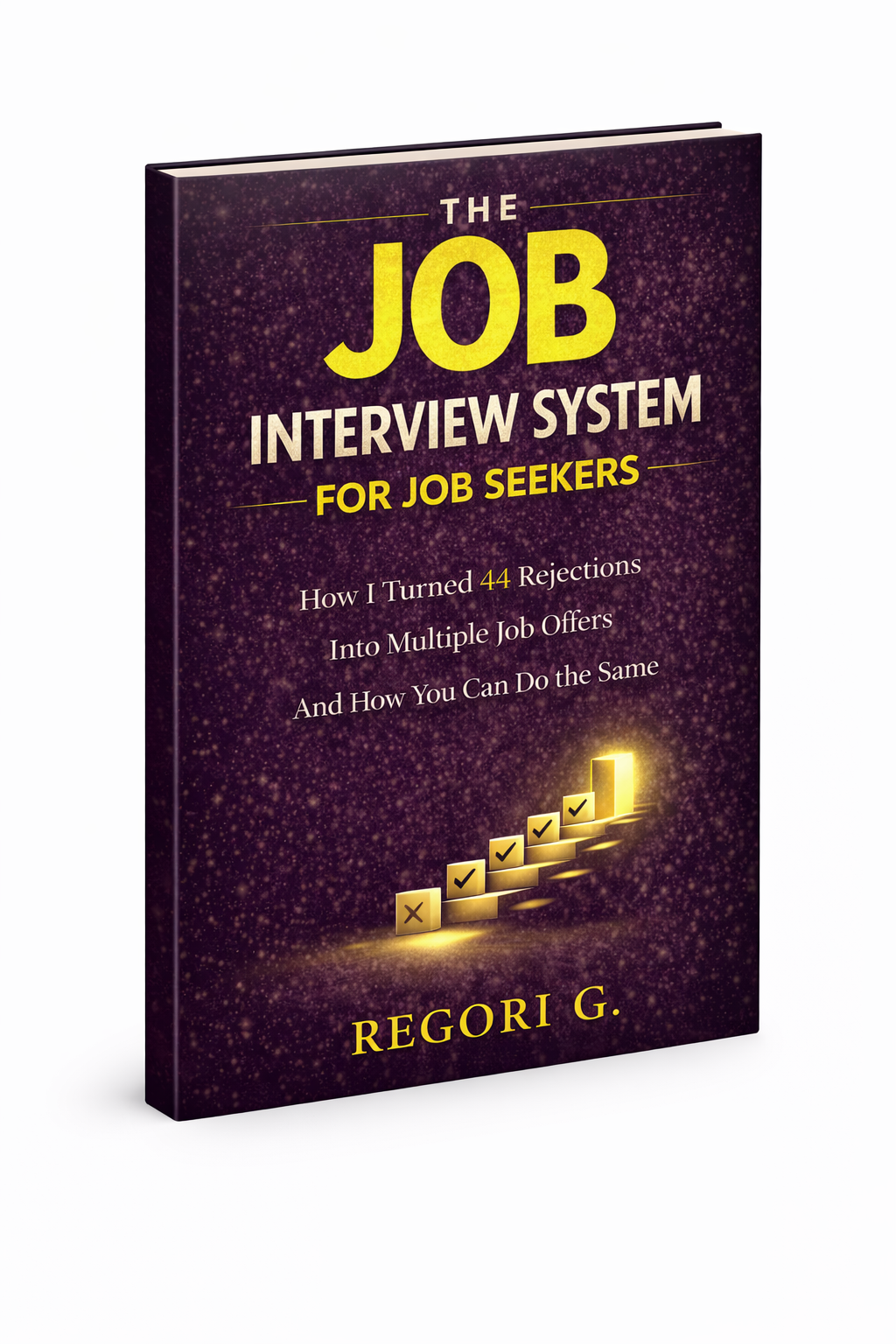
This is the pick we reach for first because it solves the problem every other book leaves open: turning reading into rehearsed performance. Delivered as an instant-download ebook with printable worksheets, it gives you a sequenced system — diagnose the interview type, build your story bank, structure answers, rehearse on a schedule — so you walk in with answers you’ve already delivered out loud, no waiting for shipping.
📘 Available as an ebook — instant download
Key features
- Role-matched prep paths (behavioural, technical, panel)
- Story-bank builder using the STAR structure
- Word-for-word answer frameworks you adapt
- Two-week rehearsal schedule with daily reps
- Salary and closing-question scripts
- Follow-up email templates that get replies
- Printable worksheets, not just reading
- Pairs with any AI mock-interview tool
Pros
- Action-first: you build answers, not just notes
- Works for every interview type and seniority
- Fast to run in the two weeks before an interview
Cons
- Not a deep-dive on any single niche (e.g. coding)
- You have to do the rehearsal — no shortcuts
Why it wins
It’s the only entry on this list built as a system you execute rather than a book you read. That closes the gap between knowing what to say and being able to say it under pressure — the gap where most candidates lose the offer.
“Reading about interviews makes you informed. Rehearsing makes you hired. This is built for the second one.”
💰 Buy the ebook — $27.99 →Disclosure: The Job Interview System is published by Job Recruiter Directory, the publisher of this article. We rank it first because it is the only entry built as a do-it-now system rather than a book to read — but the nine titles below are independent works we do not sell, and the rankings reflect what each is genuinely best for.
Cracking the Coding Interview
★ Best for: software engineers facing technical screens ★The undisputed standard for software interviews. McDowell — a former engineer and hiring-committee member at Google, Microsoft and Apple — packs the book with 189 real programming questions, each with a walk-through of how to derive the solution, plus a behind-the-scenes look at how top companies actually hire.
Key features
- 189 real questions with full worked solutions
- Hints that mirror what you’d get in a live interview
- Five strategies for unseen algorithm problems
- Big-O, data structures and core algorithms
- Company-by-company hiring breakdowns
- Behavioural-question coverage for engineers
- Guidance for experienced candidates
- Advice for interviewers too
Pros
- Genuinely comprehensive and battle-tested
- Teaches problem-solving, not memorisation
- Insider view of FAANG hiring
Cons
- Only relevant to technical/coding roles
- Dense — needs weeks, not a weekend
Why it wins
No other coding-interview book matches its depth or credibility. If your interview involves a whiteboard or an online assessment, this is non-negotiable.
“These interview questions are real; they are not pulled out of computer science textbooks.”
💰 Around $39.95 paperbackCase in Point
★ Best for: aspiring management consultants ★The definitive resource for case interviews. Cosentino’s “Ivy Case System” gives you a repeatable way to break down any business problem — market sizing, profitability, market entry — and present a structured solution under pressure. It’s the book on consulting candidates’ desks at every top MBA programme.
Key features
- The Ivy Case System framework
- Dozens of practice cases with model answers
- Market-sizing and estimation drills
- Profitability and market-entry templates
- Guidance on structuring out loud
- Partner-round and behavioural prep
- Common case archetypes mapped
- Self-assessment scorecards
Pros
- The category leader for case interviews
- Frameworks transfer across case types
- Plenty of cases to practise on
Cons
- Niche — consulting and case roles only
- Frameworks need a live partner to drill
Why it wins
It turns the most intimidating interview format into a system you can rehearse. For consulting, no general interview book comes close.
“A case interview rewards structure over cleverness — and structure is exactly what this book drills.”
💰 Around $30 paperback60 Seconds & You’re Hired!
★ Best for: candidates who ramble or freeze ★A short, sharp guide built around the “60-Second Sell” — a technique for delivering a compelling, focused summary of your value in under a minute. If your problem is talking too long, losing the thread, or going blank, this is the most efficient fix on the list.
Key features
- The 60-Second Sell pitch technique
- The “5 Point Agenda” for focus
- Concise answers to common questions
- Salary-negotiation tactics
- Phone and video interview tips
- Memorable closing strategies
- Quick to read and apply
- Strong for early-career candidates
Pros
- Fast, practical, easy to implement
- Directly fixes rambling and nerves
- Useful negotiation chapter
Cons
- Light on technical and case interviews
- Less depth than comprehensive guides
Why it wins
It targets the single most common interview failure — saying too much, too vaguely — with one memorable, rehearsable tool. High impact for very little reading time.
“Brevity is a skill. This book makes it one you can practise on a timer.”
💰 Around $17 paperbackKnock ’em Dead Job Interview
★ Best for: a thorough end-to-end overview ★A comprehensive, no-nonsense walk through the whole interview process, from anticipating questions to understanding the psychology behind hiring decisions. Yate’s strength is teaching you to align your skills with what the employer is actually trying to de-risk when they hire.
Key features
- Full interview lifecycle coverage
- How to decode the employer’s real needs
- Answer templates for tough questions
- The psychology of hiring decisions
- Strategic self-marketing
- Phone, panel and stress interviews
- Negotiation and closing
- Pairs well with a story-bank system
Pros
- Broad and genuinely thorough
- Strong on employer psychology
- Good for all experience levels
Cons
- Breadth means less depth per topic
- Can feel like a lot to absorb at once
Why it wins
It’s the best single-volume map of the whole process. If you want one general book that leaves no stage uncovered, start here — then pair it with a rehearsal plan.
“Understand what the employer is afraid of, and every answer suddenly has a target.”
💰 Around $16 paperbackProgramming Interviews Exposed
★ Best for: developers rebuilding fundamentals ★The gentler on-ramp to technical interviews. Where Cracking the Coding Interview goes deep, this title focuses on rebuilding core foundations — data structures, algorithms, problem-solving habits — making it ideal for candidates returning to coding or shoring up the basics before the harder book.
Key features
- Foundational data structures and algorithms
- Step-by-step problem-solving approach
- Language-agnostic core concepts
- Coverage of non-coding technical topics
- Counting, scaling and concurrency basics
- Resume and process guidance
- Approachable pacing
- Good companion to a harder text
Pros
- Excellent for rebuilding fundamentals
- Less intimidating than CTCI
- Clear, methodical explanations
Cons
- Not enough on its own for FAANG depth
- Technical roles only
Why it wins
It meets rusty or early-career developers where they are. The best first technical book before you graduate to the heavyweight.
“Fundamentals first. You can’t optimise a solution you can’t yet build.”
💰 Around $30 paperbackPresence
★ Best for: nerves, confidence and body language ★Cuddy’s work on nonverbal behaviour underpins one of the most-watched TED talks ever, with more than 43 million views. Presence is about bringing your authentic, confident self to high-stakes moments — and few moments are higher-stakes than an interview. A worthwhile read on the psychology of showing up well.
Key features
- The science of nonverbal communication
- Techniques to reduce pre-interview anxiety
- Tools for impostor syndrome
- Authentic self-presentation
- Research-backed confidence routines
- Pre-meeting mental preparation
- Storytelling rooted in real research
- Applies well beyond interviews
Pros
- Tackles the emotional side most books ignore
- Engaging, well-written and memorable
- Useful for any high-pressure moment
Cons
- Some “power posing” claims didn’t replicate well in later studies
- Not a tactical answer-by-answer guide
Why it wins
Answers win points; presence wins the room. If nerves are your real obstacle, this addresses the part no answer script can fix — just treat the confidence-building, not the disputed hormonal claims, as the takeaway.
“You can have the perfect answer and still lose the room. Presence is the other half of the interview.”
💰 Around $18 paperbackThe STAR Method, Mastered
★ Best for: behavioural & competency interviews ★“Tell me about a time when…” questions dominate modern interviews, and they’re all answered the same way: Situation, Task, Action, Result. A dedicated STAR-method guide teaches you to convert your real experience into tight, scorable stories — the single highest-leverage skill for behavioural panels.
Key features
- The full STAR structure, explained
- Worked examples across competencies
- How to quantify your “Result”
- Story-bank building exercises
- Common behavioural question banks
- Public-sector competency mapping
- Tightening waffle into impact
- Adaptable to any role or level
Pros
- Directly trains the most-tested format
- Method transfers to any question
- Fast to learn, lasting payoff
Cons
- Quality varies between editions/authors
- Needs your own stories to be useful
Why it wins
STAR is the lingua franca of competency interviews from graduate schemes to the Civil Service. Master it and you can answer questions you’ve never seen. Our interview prep guide shows how to build a reusable STAR story bank.
“Situation, Task, Action, Result — four words that turn a ramble into a score.”
💰 Starting at $5–$15The Manager’s Book of Questions
★ Best for: leadership & management interviews ★Written for interviewers, which is exactly why candidates should read it. Kador compiles hundreds of questions used to probe leadership, decision-making and team management. Reading it flips the table: you see the assessment from the hiring side and prepare your evidence accordingly.
Key features
- Hundreds of managerial interview questions
- Leadership-assessment criteria
- Decision-making probes
- Team and conflict scenarios
- What “good” answers reveal
- Behavioural question design
- Insight into scoring logic
- Useful for both sides of the table
Pros
- Rare interviewer’s-eye perspective
- Excellent for leadership roles
- Reveals what panels are really scoring
Cons
- Not written as candidate prep
- Less relevant for junior roles
Why it wins
Knowing the question behind the question is a genuine edge. For management and leadership interviews, seeing the interviewer’s playbook is preparation few candidates do.
“Read the interviewer’s manual and the interview stops being a guessing game.”
💰 Around $19 paperbackWhat Color Is Your Parachute?
★ Best for: career changers & job-search strategy ★The classic job-hunting book, and a smart pick if your real challenge is upstream of the interview itself. Bolles’ “Flower Exercise” helps you identify the roles you’re genuinely suited to, so you walk into interviews you actually want — which makes every answer more convincing.
Key features
- The Flower Exercise self-assessment
- Skills, values and passions mapping
- Networking and informational interviews
- Proactive (non-application) job search
- Career-change frameworks
- Interview-as-conversation mindset
- Updated annually for the market
- Long-term career direction
Pros
- Best-in-class for direction and self-discovery
- Strong on networking your way in
- Regularly updated
Cons
- Light on in-room interview tactics
- Broader than interview prep alone
Why it wins
The most convincing interview answers come from wanting the job. If you’re changing direction, fixing your targeting beats polishing answers for roles that don’t fit.
“Conviction can’t be faked. Aim at the right job and your answers stop sounding rehearsed.”
💰 Around $16 paperbackThe plan
The 5-phase preparation stack
Don’t read these books in parallel and hope. Run them in sequence, each one doing a specific job in a specific week. Here’s how the picks fit together into a two-to-three-week plan.
Diagnose your interview type
Before buying anything, name the format you’re facing: behavioural panel, coding screen, case interview, or leadership round. This single decision determines which book is your core text. Skip it and you’ll waste time on prep that doesn’t apply.
Extract one framework
Read your core book for the method, not the trivia — STAR, the 60-Second Sell, or the Ivy Case System. You want one repeatable structure you can apply to any question, captured on a single page you can see at a glance.
Build your story bank
Map your real experience onto that framework: six to eight concrete stories with measurable results, each ready to flex across several questions. This is where The Job Interview System does the heavy lifting — it gives you the worksheets to do this fast.
Rehearse out loud, on a timer
Deliver every answer aloud until it’s smooth and under time. Use an AI mock-interview tool or a friend for live reps. This is the phase that separates informed candidates from hired ones — and the one most people skip.
Calibrate presence & follow-up
In the final days, work on delivery and nerves (this is where Presence earns its place) and prepare your post-interview follow-up. A sharp thank-you note keeps you front of mind while decisions are made.
At a glance
Full comparison: all 10 books side by side
Star ratings reflect ease of use for a typical candidate. “Universal” means it works regardless of your interview type; the rest are role-specific by design.
| Book | Best for | Key feature | Ease of use | Universal? | Price |
|---|---|---|---|---|---|
| The Job Interview System | Any candidate | Ebook system + worksheets | ★★★★★ | ✅ | $27.99 |
| Cracking the Coding Interview | Software engineers | 189 worked problems | ★★★☆☆ | ⚠️ | ~$40 |
| Case in Point | Consultants | Ivy Case System | ★★★☆☆ | ⚠️ | ~$30 |
| 60 Seconds & You’re Hired! | Ramblers / nervous | 60-Second Sell pitch | ★★★★★ | ✅ | ~$17 |
| Knock ’em Dead Job Interview | End-to-end overview | Full lifecycle + psychology | ★★★★☆ | ✅ | ~$16 |
| Programming Interviews Exposed | Developers (basics) | Fundamentals rebuild | ★★★★☆ | ⚠️ | ~$30 |
| Presence | Confidence / nerves | Nonverbal + mindset | ★★★★☆ | ✅ | ~$18 |
| The STAR Method, Mastered | Behavioural panels | Scorable story structure | ★★★★★ | ✅ | $5–$15 |
| The Manager’s Book of Questions | Leadership roles | Interviewer’s-eye view | ★★★☆☆ | ⚠️ | ~$19 |
| What Color Is Your Parachute? | Career changers | Flower Exercise targeting | ★★★★☆ | ⚠️ | ~$16 |
If you read this whole table looking for the one universal answer: pick a behavioural/STAR system as your base, add a role-specific technical or case book only if your interview demands it, and spend most of your time rehearsing. That combination beats owning all ten.
Questions
Frequently asked questions
What is the best book for interview preparation overall?
There’s no single best book for everyone — and any list that claims otherwise is overselling. The best book for interview preparation depends entirely on your interview type. For behavioural and competency panels, a STAR-method guide is your highest-leverage read. For software roles, Cracking the Coding Interview is essential. For consulting, it’s Case in Point. That said, the biggest result for most candidates comes from pairing a behavioural answer system with deliberate rehearsal, which is exactly what The Job Interview System is built to deliver. Match the book to the interview, then practise.
How long before an interview should I start reading?
Give yourself two to three weeks if you can. Books teach frameworks, but frameworks only work once you’ve rehearsed your own answers out loud — and that takes longer than reading does. A realistic schedule: one week to read your core book and extract its method, one week to build your story bank, and a few days to rehearse and refine delivery. If you’ve only got a weekend, skip the comprehensive titles entirely and go straight to a STAR guide plus rehearsal. Our interview prep walkthrough includes a day-by-day schedule you can adapt to whatever runway you have left.
What’s the difference between a behavioural book and a technical interview book?
They prepare you for completely different interviews. A behavioural book (like a STAR-method guide or Knock ’em Dead) trains you to tell structured stories about your past experience — answering “tell me about a time when…” questions that test soft skills and judgement. A technical book (like Cracking the Coding Interview) trains you to solve problems on the spot: algorithms, data structures, system design. Most real interview processes include both rounds, so many candidates need one of each. Diagnose your specific format first, then choose. Buying a coding book for a behavioural panel — or vice versa — is the most common preparation mistake we see.
Is Cracking the Coding Interview worth it if I’m not applying to FAANG?
Yes, with a caveat. The book is genuinely the gold standard for any role with a coding screen or technical assessment, not just Google and Meta — plenty of mid-size companies use similar formats. The 189 worked problems and the focus on deriving solutions build skills that transfer anywhere. The caveat: it’s dense and time-consuming, so if your technical bar is lighter, Programming Interviews Exposed may be a faster, more proportionate fit. If your interview has no coding component at all, skip both and invest that time in behavioural prep instead.
Are interview books still worth it now that AI mock interviews exist?
Absolutely — they solve different problems. AI mock-interview tools are excellent for getting reps and feedback, but they assume you already have a method and a set of structured stories to deliver. A book gives you that underlying framework; the AI tool gives you practice applying it. The strongest preparation combines both: read for the method, then drill with AI or a real person. Think of the book as the playbook and the mock interview as the scrimmage. You can plug any of the books on this list into the rehearsal cadence in our interview system.
How do I prepare if I have interviews in different formats?
Layer your prep instead of trying to read everything. Start with a universal base: a STAR-method guide, because behavioural questions appear in nearly every interview regardless of role. Then add exactly one role-specific book for your hardest round — a coding or case title — and nothing more. Build a single story bank that works across all your interviews, and adjust only the technical preparation per company. The mistake is treating each interview as a separate reading project; the fix is one strong foundation plus targeted top-ups. Our prep hub shows how to run this layered approach.
Does power posing actually work before an interview?
Be careful here. Amy Cuddy’s Presence popularised “power posing,” and her TED talk has been viewed more than 43 million times — but the specific claim that posing changes your hormone levels has not held up well in later replication studies. What the broader research still supports is gentler: adopting open, expansive postures can make you feel more confident, and confidence genuinely helps in interviews. So treat the book as a useful read on presence and nerves, take the confidence-building seriously, and don’t bank on a two-minute pose as a magic hormonal hack. The real edge comes from rehearsed answers delivered calmly.
Should I buy several books or just one?
Just one to start — buying a stack is usually procrastination dressed up as diligence. The candidates who struggle are rarely short of reading material; they’re short of rehearsed answers. Pick the single book that matches your interview type, extract its framework quickly, and spend the bulk of your time building and practising your own answers. Add a second book only if you have a genuinely distinct second round (say, a coding screen on top of a behavioural panel). For most people, one well-chosen book plus the structured rehearsal in our interview system is the whole job.
Stop reading about interviews. Start passing them.
The books teach the theory. The Job Interview System turns it into rehearsed, role-matched answers you can deliver under pressure — in the two weeks before your interview, not someday.
Get The Job Interview System →Or explore the full free interview prep hub first
Sources
References
Every factual claim in this article links to a primary or authoritative source. Full list below.
- Job Recruiter Directory. The Job Interview System for Job Seekers (ebook) & “Pass Your Job Interview” guide — primary source for the preparation framework, two-to-three-week schedule and rehearsal method referenced throughout. jobrecruiterdirectory.com · get the ebook.
- McDowell, Gayle Laakmann. Cracking the Coding Interview: 189 Programming Questions and Solutions (6th ed.), CareerCup. barnesandnoble.com — publisher listing confirming the 189 questions and edition.
- Michigan State University. “Eleven new studies suggest ‘power poses’ don’t work.” MSUToday. msutoday.msu.edu — TED talk view count (43M+) and replication findings on power posing.
- Cuddy, Amy. “Inside the debate about power posing: a Q&A.” TED Ideas. ideas.ted.com — author’s response on what the evidence does and does not support.
- Ryan, Robin. 60 Seconds & You’re Hired!, Penguin Books. penguinrandomhouse.com — publisher page; the “60-Second Sell” technique.
- Cosentino, Marc. Case in Point: Complete Case Interview Preparation, Burgee Press. goodreads.com — the Ivy Case System for consulting interviews.
- Yate, Martin. Knock ’em Dead Job Interview, Adams Media. goodreads.com — comprehensive interview-process guidance.
- Mongan, J., Kindberg, N. S. & Giguère, E. Programming Interviews Exposed (4th ed.), Wiley. wiley.com — foundational technical-interview text.
- Cuddy, Amy. Presence: Bringing Your Boldest Self to Your Biggest Challenges, Little, Brown Spark. goodreads.com — body language, confidence and presence.
- Kador, John. The Manager’s Book of Questions, McGraw-Hill. mheducation.com — interviewer’s-eye view of leadership questions.
- Bolles, Richard N. What Color Is Your Parachute?, Ten Speed Press. penguinrandomhouse.com — the Flower Exercise and job-search strategy.
- Indeed Career Guide. “How To Use the STAR Interview Response Technique.” indeed.com — reference for the STAR (Situation, Task, Action, Result) method.